
The Chupacabra is one of the best-known creatures in modern folklore. The legend took shape in Puerto Rico in 1995, following reports of domestic animals found dead under unusual circumstances. Within months, the story of an unidentified predator allegedly attacking goats, sheep, and poultry had reached the international press. Reports of supposed sightings soon began to emerge across Latin America and the United States.
What Is the Chupacabra, and Where Does Its Name Come From?
The name comes from the Spanish words chupar, meaning „to suck”, and cabra, meaning „goat”. It translates roughly as „goat-sucker”. The term became widely used in Puerto Rico in 1995 and is generally attributed to Puerto Rican television host and comedian Silverio Pérez, who helped popularize it in the local media.
The name reflects the creature’s most distinctive alleged characteristic: it was said to drain its victims of blood rather than simply kill them for food.
The earliest widely circulated descriptions portrayed a creature about one meter tall, with large eyes, gray skin, and spines running down its back. It reportedly walked on two legs, while some accounts also mentioned fangs, claws, and the ability to make unusually long leaps.
Years later, however, the name Chupacabra became associated in the United States with animals that looked entirely different: extremely thin, almost hairless four-legged creatures resembling coyotes or dogs.
Before the Chupacabra: The Moca Vampire
Stories of animals dying under mysterious circumstances circulated in Puerto Rico long before 1995. In 1975, several animals were found dead near the town of Moca, and reports of a supposed creature known as El Vampiro de Moca, or the „Moca Vampire”, began circulating among residents and in the local press.
The creature was said to attack domestic animals and drain their blood. Today, the episode is regarded as a precursor to the Chupacabra legend, although the name itself was not used at the time. The name and familiar image of the creature emerged two decades later.
In the spring of 1995, more domestic animals were found dead under unusual circumstances in Puerto Rico. Some had small wounds around their necks or chests, while their owners claimed that the bodies appeared to have been drained of blood.
As reports multiplied, separate incidents increasingly came to be attributed to the same unidentified creature.
Madelyne Tolentino and the Classic Image of the Chupacabra
One of the accounts that most strongly influenced the popular image of the Chupacabra came from Madelyne Tolentino, a resident of Canóvanas, Puerto Rico.
In 1995, Tolentino claimed to have seen a creature approximately 1.2 meters tall that walked on two legs. She described it as having large, dark eyes, thin arms, three fingers on each hand, and spines or feather-like projections along its back.
Her account received widespread coverage on television and in newspapers. The image of a gray, two-legged creature with spines along its back soon became the most recognizable depiction of the Chupacabra.
Benjamin Radford, an American researcher known for investigating claims involving paranormal phenomena and mysterious creatures, spent approximately five years studying the origins of the legend. His research included interviews, fieldwork, and an examination of cases involving physical evidence. The findings were published in his 2011 book Tracking the Chupacabra: The Vampire Beast in Fact, Fiction, and Folklore.
Radford noted similarities between Tolentino’s description and Sil, the alien creature featured in the 1995 science fiction film Species. Tolentino had seen the film before her alleged encounter and later acknowledged the resemblance. Radford suggested that the film may have influenced her description, although the hypothesis alone does not account for all subsequent reports.
Canóvanas, a town in northeastern Puerto Rico, became one of the places most closely associated with the phenomenon. In 1995, residents reported alleged sightings of the creature and the deaths of domestic animals.
Mayor José Ramón „Chemo” Soto even organized searches for the supposed predator. One such expedition, held in October 1995, involved local residents and police officers. The event attracted media attention, and the Chupacabra story began receiving coverage beyond Puerto Rico.
In the years that followed, alleged sightings were reported in the Dominican Republic, Mexico, and numerous countries across Central and South America, including Argentina, Bolivia, Brazil, Chile, Colombia, Honduras, Nicaragua, Panama, and Peru.
In the United States, the legend became particularly widespread in Texas. There, however, the supposed Chupacabra no longer resembled the two-legged creature described in Puerto Rico. Instead, it was portrayed as an almost completely hairless animal resembling a dog or coyote.
The Texas Cases
Beginning in the 2000s, photographs and carcasses of unusual animals began attracting attention in Texas, with some people claiming they might be Chupacabras. The animals were extremely thin and almost hairless, with grayish skin, elongated snouts, and prominent teeth.
One of the best-known cases occurred in 2007 near Cuero, Texas. Phylis Canion discovered the carcass of such an animal and preserved its head for examination.
Researchers at Texas State University analyzed a tissue sample from the animal. DNA testing identified it as Canis latrans, the scientific name for the coyote.
Other animals presented as possible Chupacabras were also identified, following examination, as coyotes, dogs, raccoons, or other known mammals. The Texas A&M Veterinary Medical Diagnostic Laboratory, for example, reported a case involving an animal submitted for examination as a possible Chupacabra. It was identified as a coyote suffering from mange.
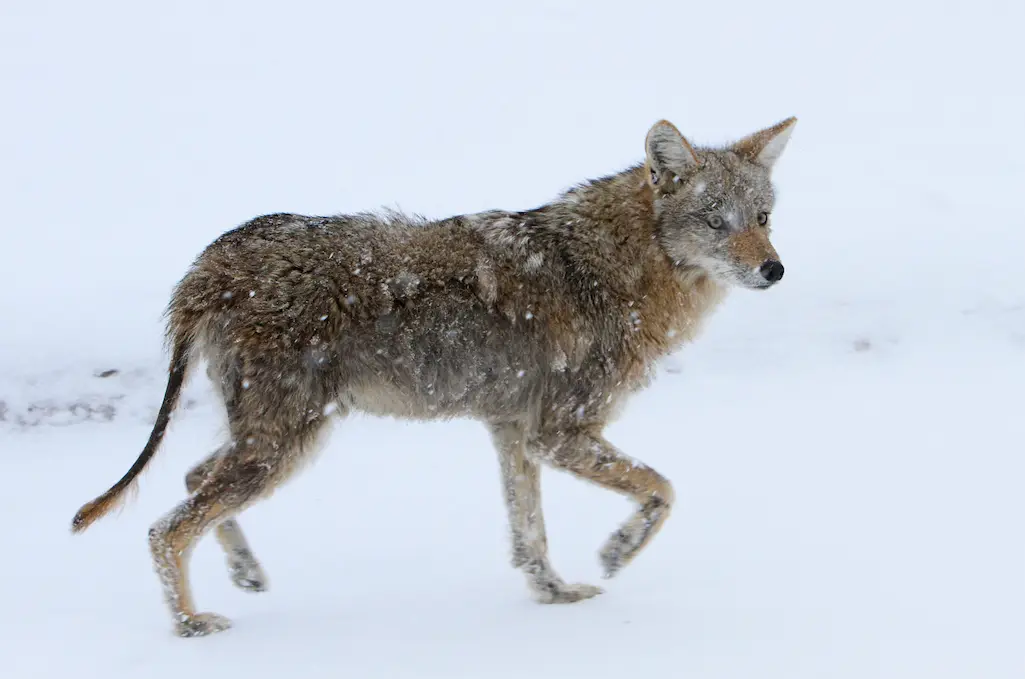
Many of the animals described as Chupacabras in the United States were coyotes affected by sarcoptic mange, a skin disease caused by the mite Sarcoptes scabiei. The condition can cause inflammation, crusting, intense itching, and extensive hair loss.
In severe cases, a coyote may become extremely thin and lose almost all its fur. Its exposed skin can take on a grayish appearance, making the animal look very different from a healthy coyote. Hair remaining along the back can also give the impression of a raised crest.
Mange can also affect an animal’s behavior. A weakened coyote may struggle to catch fast-moving wild prey and venture closer to homes and farms, where chickens, rabbits, and other domestic animals are easier to capture. Their unusual appearance and tendency to approach populated areas helped fuel the belief that these animals were Chupacabras.
What Scientific Examinations and DNA Tests Revealed
One of the most persistent claims surrounding the Chupacabra is that its victims were found completely drained of blood. However, in cases examined by specialists, blood was still present in the animals’ bodies. Wounds around the neck could also be explained by attacks from ordinary predators, such as dogs or coyotes.
Genetic testing has likewise provided no evidence of an unknown species. Animals for which biological samples were available proved to belong to known species, particularly coyotes and other canids. The specimen discovered near Cuero, Texas, in 2007 was identified through DNA analysis as a coyote.
As for the two-legged creature described in Puerto Rico in 1995, no specimen matching that description has ever been captured and examined by zoologists. Reports from that period therefore remain based on eyewitness accounts and incidents attributed to the supposed creature.
The Chupacabra legend emerged at a time when television and newspapers could rapidly spread a story from Puerto Rico to millions of people. The rise of the internet later accelerated the circulation of new reports.
Numerous theories also emerged about the creature’s origins. Some suggested that it was the result of a genetic experiment gone wrong, an animal created in a secret laboratory, an undiscovered species, or an extraterrestrial being.
The Chupacabra soon entered popular culture as well, appearing in films, television series, video games, literature, and programs devoted to paranormal phenomena.