
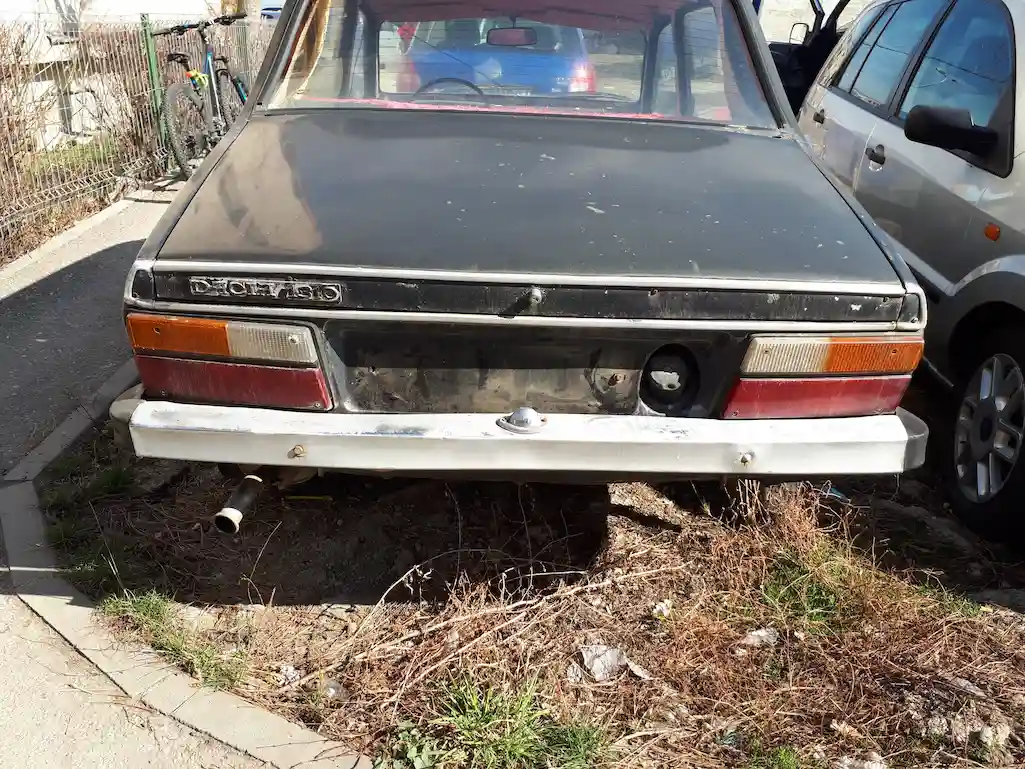

The legend of the “Black Dacias” circulated in several parts of Romania during the final decades of the communist regime. Children were told that unknown people traveled in black Dacia cars and abducted them to take their blood or, in other versions, their organs. The story was later recorded in several cities and bears similarities to the legend of the “Black Volga,” which was widespread in Poland and other Eastern European countries.
The “Black Dacias” of Reșița and Călărași
In Reșița, one of the versions known during the 1970s and 1980s told of “members of religious sects” who drove black Dacias and abducted children for their blood. Parents warned their children not to stay outside too late, and the story remained in the memories of several generations.
A similar version circulated in Călărași, particularly toward the end of the 1980s. People said that individuals traveling in black Dacias, sometimes with Bucharest license plates, abducted children from playgrounds.
No kidnapping cases have been identified that confirm the existence of such groups. In later accounts, the story appears as an urban legend passed down orally.
A very similar story had already circulated in Poland during the 1960s and 1970s. Known as the “Black Volga,” it told of a Soviet-made car that abducted children.
Polish folklorist Dionizjusz Czubala examined the legend in a 1991 study, “The ‘Black Volga’: Child Abduction Urban Legends in Poland and Russia.” The versions he collected described children being abducted for their blood or organs and mysterious people traveling in a black Volga.
In some accounts, the abducted child was later found drained of blood. In others, the blood was supposedly transported across the border or intended for sick people. The identity of the kidnappers varied from one version to another.
In Romania, the Volga was replaced in the story by the Dacia, a car far more common on the country’s roads. The main elements, however, remained the same: the black car, abducted children and the alleged removal of blood or organs.
After 1989, the motif reappeared in a different form. Stories began circulating in several parts of the country about ambulances that supposedly abducted children for organ harvesting, a modernized version of the same urban legend.